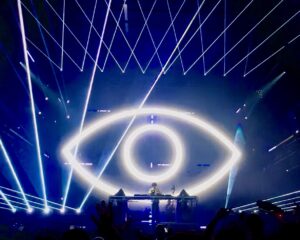









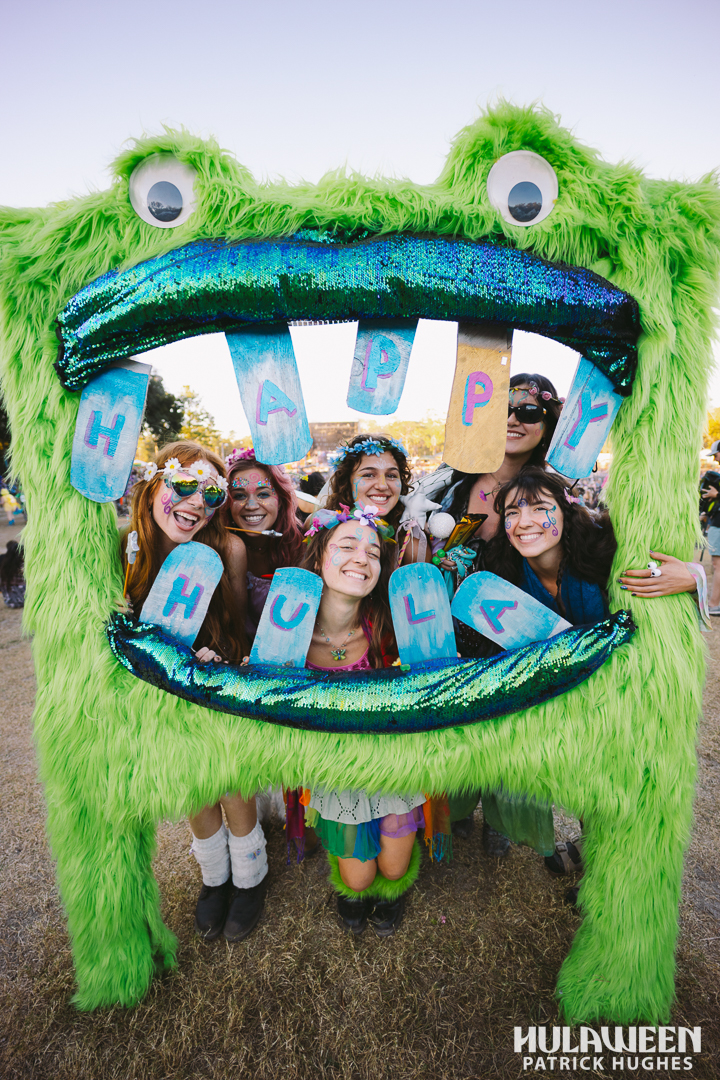
Suwannee Hulaween 2025 marked another spellbinding Halloween weekend filled with music, art, and community. Now in its twelfth year, the festival honored the soil it grew from while evolving into a sprawling showcase of creativity. Despite a few growing pains and noticeable cutbacks, Hulaween still managed to deliver the kind of immersive, otherworldly experience that keeps fans returning to the Spirit of the Suwannee.
Music & Performances
Hulaween 2025’s lineup hit a sweet spot for both jam loyalists and bass enthusiasts, blending improvisational energy with sub-shaking intensity. This year’s programming leaned funky, psychedelic, and particularly bass-forward; even the house and indie acts pulsed with a heavy low-end. From the swampy echoes of jam improvisation to the deep rumble of modern bass music, the weekend’s soundtrack felt cohesive yet wildly diverse.
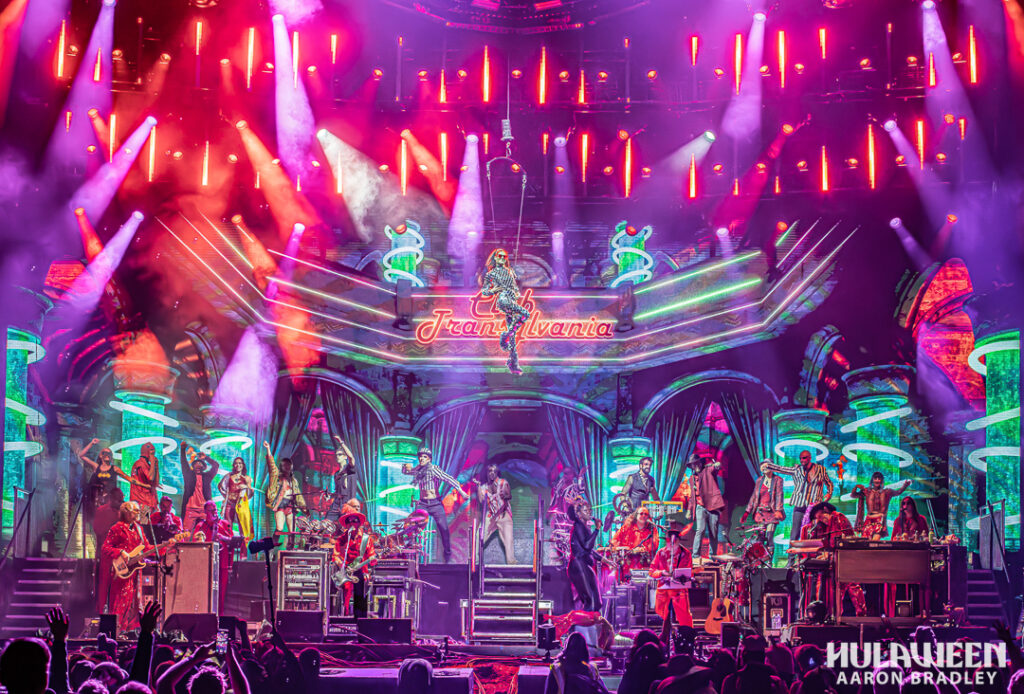
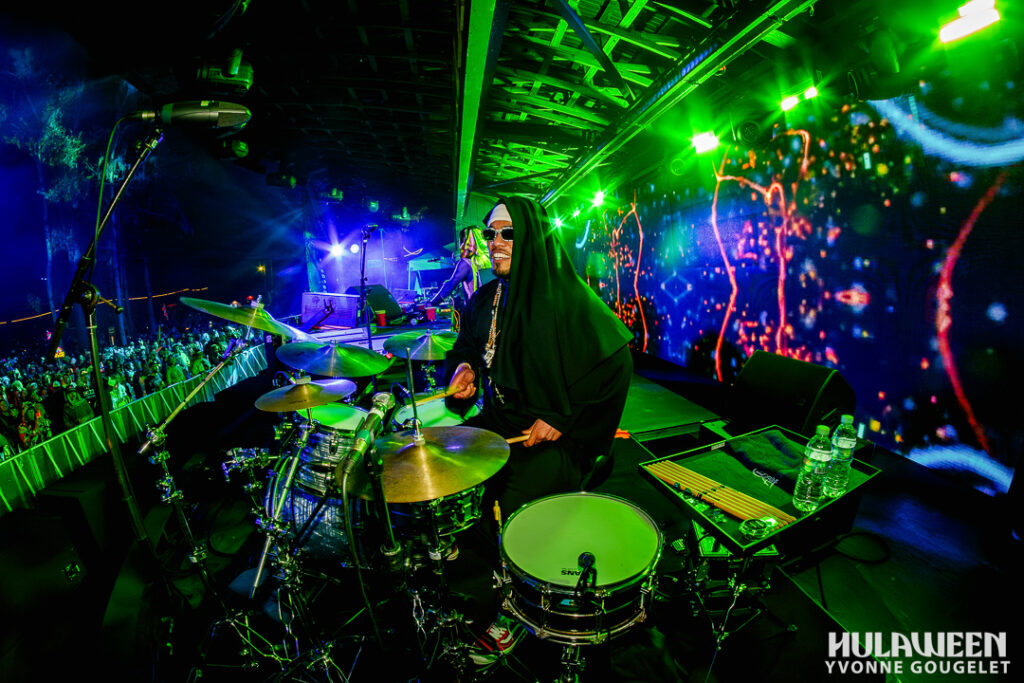
The slate catered to nearly every flavor of electronic fan: dubstep, trap, house, UKG, DnB, and techno all had their moment. Heavyweights like Zeds Dead, Illenium, and the cosmic LSZEE project (LSDREAM & CloZee) delivered cinematic highs, while Tape B and Mersiv proved unstoppable with both solo sets and a mindblowing b2b. Disco Lines, Sammy Virji, and DJ Pee .Wee (Anderson .Paak) brought a dose of groove to balance the grit. On the live side, The String Cheese Incident returned home with six outlandish extravaganzas, Goose’s two-part set drew massive crowds, and acts like Glass Beams, Parcels, Joe Russo’s Almost Dead, and The Disco Biscuits added fresh texture to the mix.
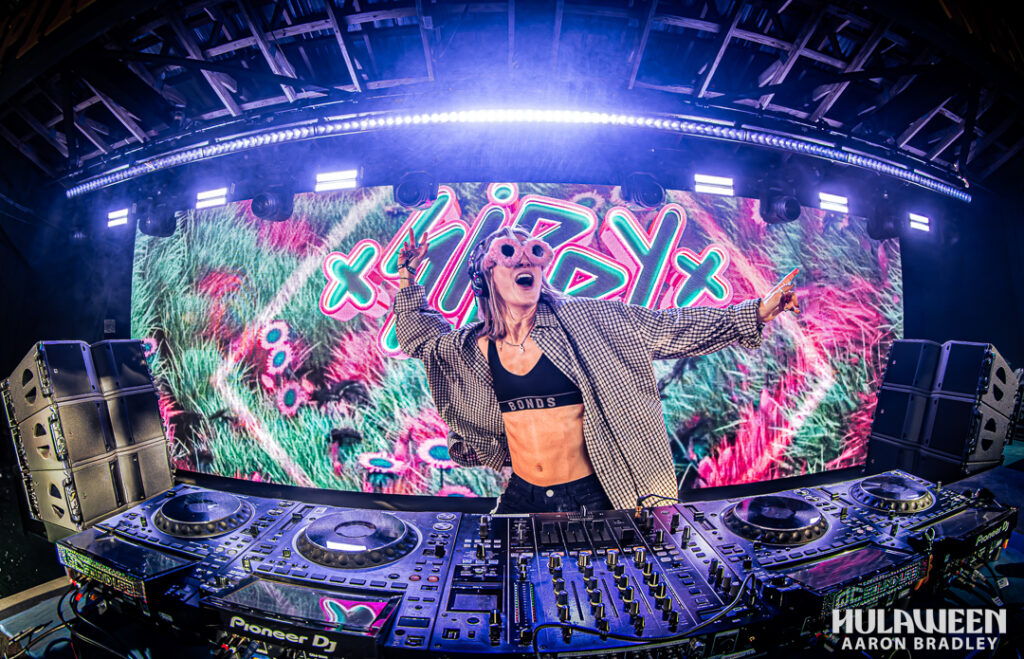
Late nights belonged to DEF OFF LIMITS, where the programming once again proved legendary. High-octane surprise sets kept fans guessing with Tape B b2b Disco Lines on Thursday, YDG’s extended burner into Niles on Friday, Mary Droppins’ Saturday takeover, and Rudashi’s Sunday closer, sparking fresh adrenaline just when the forest seemed ready to rest.
Strong scheduling made the weekend flow effortlessly, with minimal genre overlap and enough breathing room for fans to catch key sets without sprinting across the park. Even before the official stages powered down, after-hours renegades carried the torch, lighting up the Suwannee woods with spontaneous sound systems and that unmistakable Hula energy that refuses to fade.
Art & Production
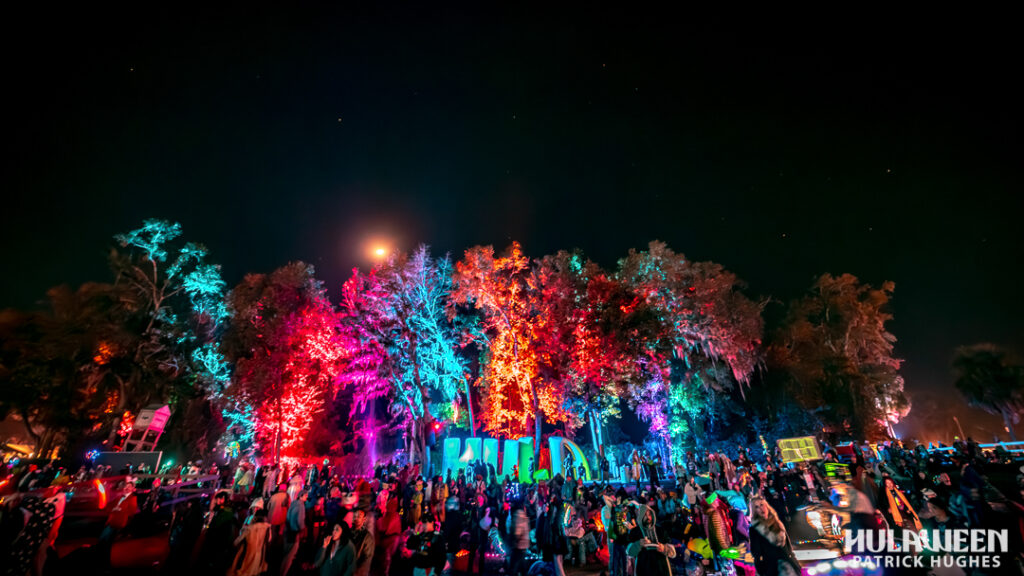
While Hulaween 2025 dazzled musically, its production revealed a shift in priorities. The festival’s heavy-hitting lineup seemed to come at the expense of some of the immersive visual flourishes that have long defined the Suwannee experience. Front and center was the replacement of the storied wooden HULA letters with cheap inflatables, a major gripe for many festival faithful.
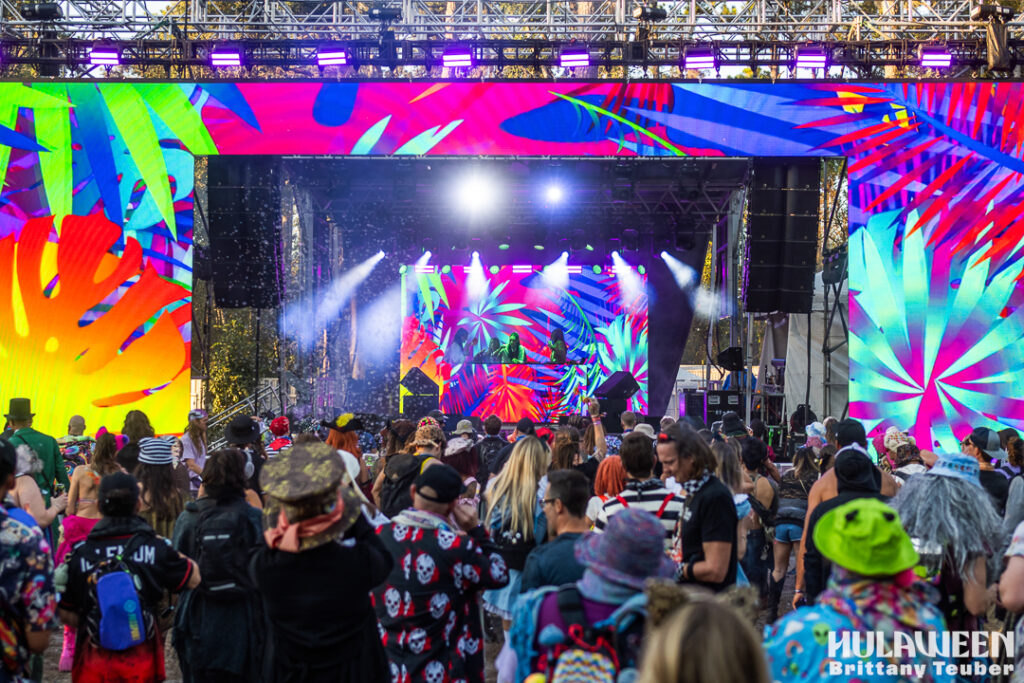
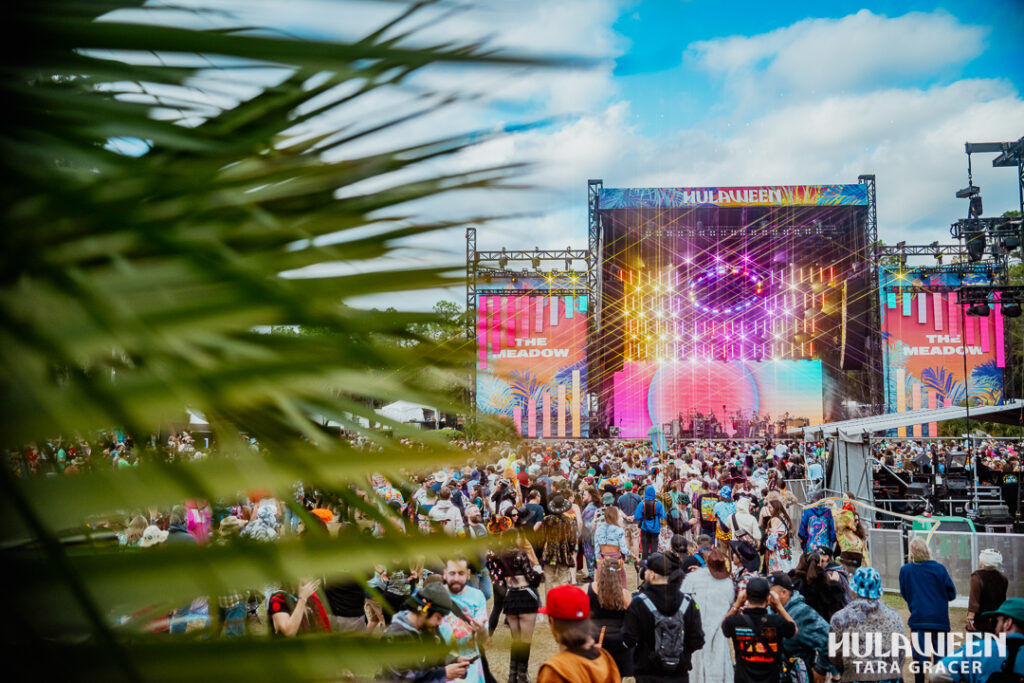
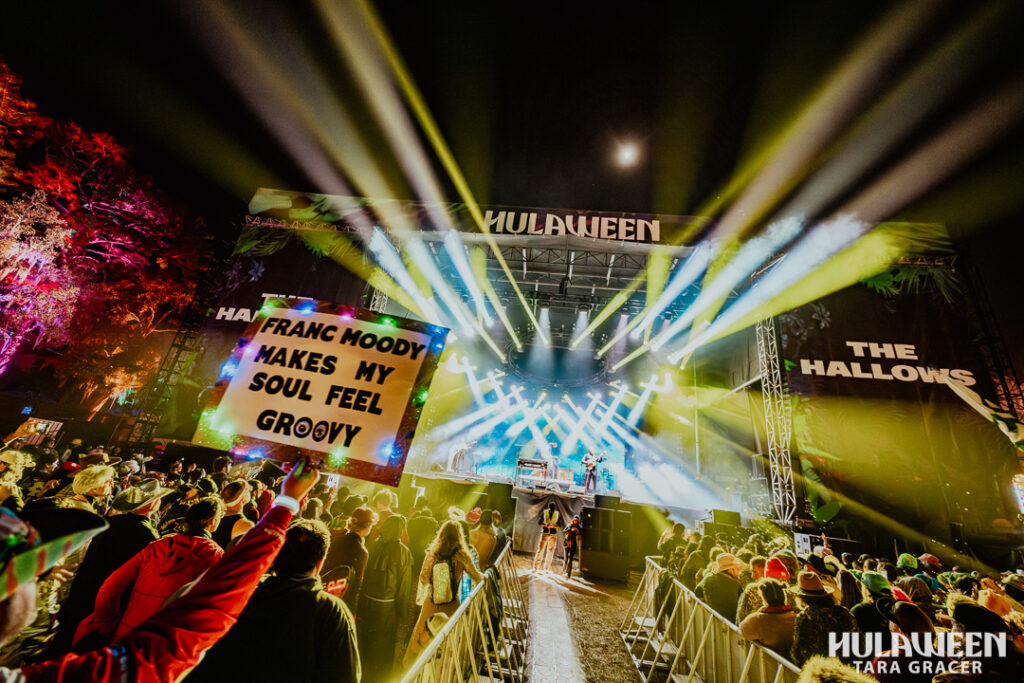
The AMP and Spirit Lake stages received upgraded LED walls—a welcome sight for some bass enthusiasts—but at what cost? The AMP also received new LED floor lighting for safe late-night movement through the crowd; however, the stark white glare clashed with the psychedelic atmosphere. Its familiar sun-sail canopy was absent, and lush tree cover was noticeably diminished. Audio quality, too, faltered compared to previous years. While the festival has never been known for pristine sound, several dead zones emerged at Spirit Lake, OFF LIMITS, and AMP—a surprising downgrade for an event on the rise.
Spirit Lake
As always, Spirit Lake served as the immersive heart of Hulaween—the place where the festival truly came to life. By day it was an idyllic escape, but after dark, it transformed into a living canvas of light, fire, and sound. This year’s theme, The Radiant Veil: The Dance of Light and Shadow, encapsulated the creative vision of Spirit Lake Experience Director and META CEO Justin Bolognino. Exploring contrast, balance, and the interplay between seen and unseen, the concept reflects the dance he underscored in our previous interview.
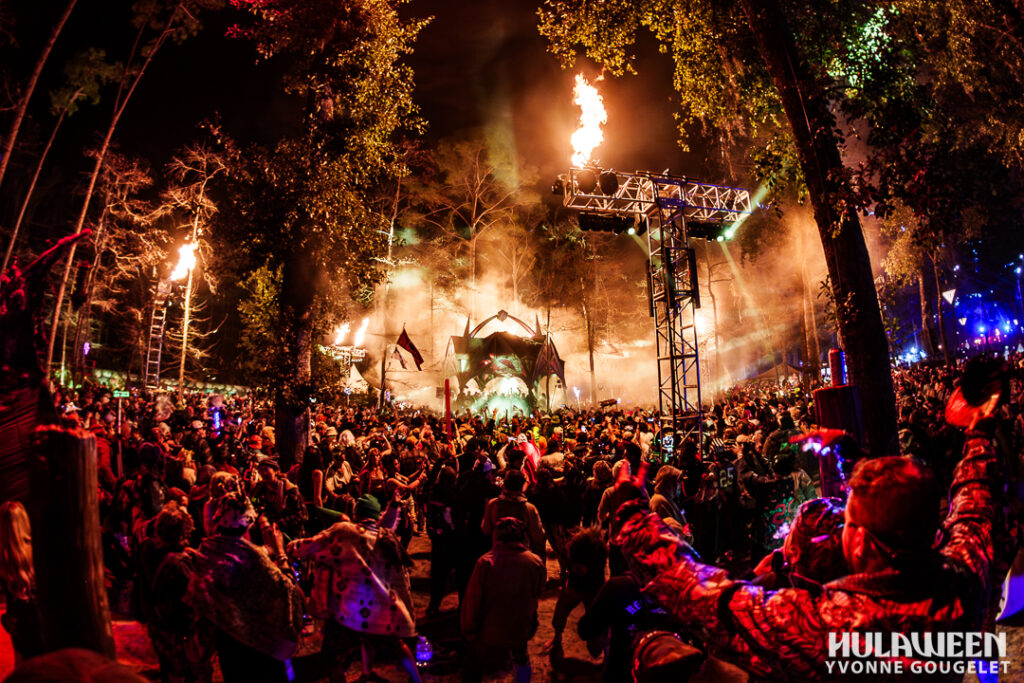
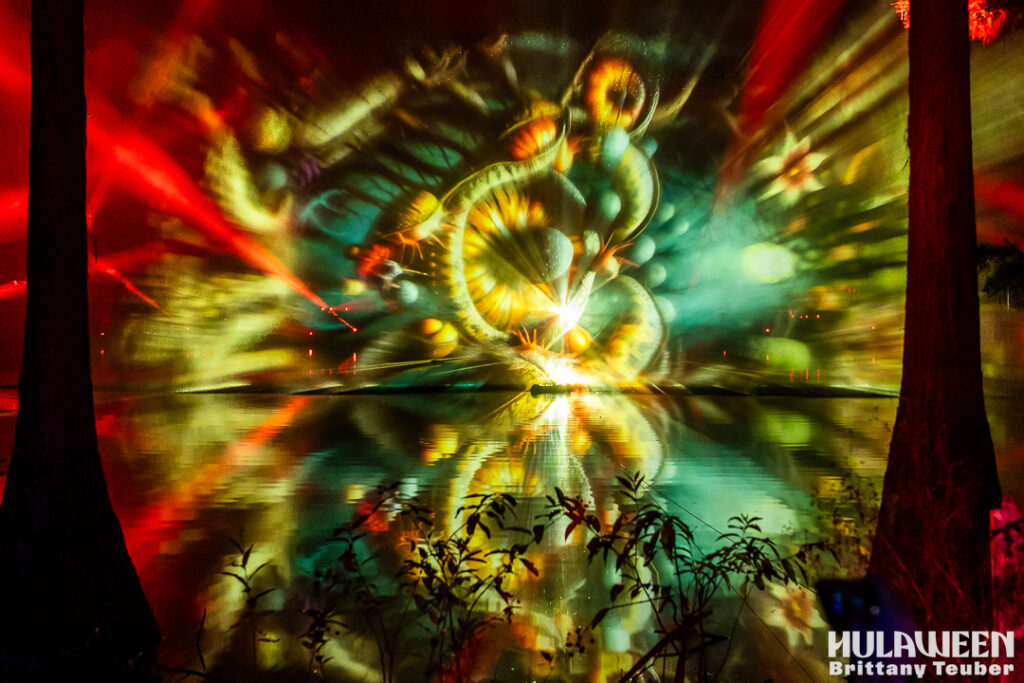
While it’s clear that budget cuts shaped the layout, Spirit Lake remained a moss-draped dreamscape with a rich blend of returning landmarks and new creations. Reimagined beneath The Radiant Veil, familiar icons reappeared: Paul Kuhn’s spooky The Witch, The Ferryman, and Ogres + Rock Hands; Thomas Dambo’s towering Spider and playful Pineapple Hands; Duende Builds’ transportive Birdhouse Village; Ania Amador’s vibrant Mural Maze; the serene Wandering Lion Tea Sanctuary; and Lost Creations’ revamped House of Lost. The DEF Off Limits 360-stage, created by Duende, RÜTS, and Bolognino, returned after its standout debut in 2024, once again merging art and performance into an all-encompassing late-night experience. The ever-popular Incendia installation roared brighter than ever with its flame jets and live performers, while Electric Dream Machine’s projection mapping tied the entire space together with vivid motion and color.
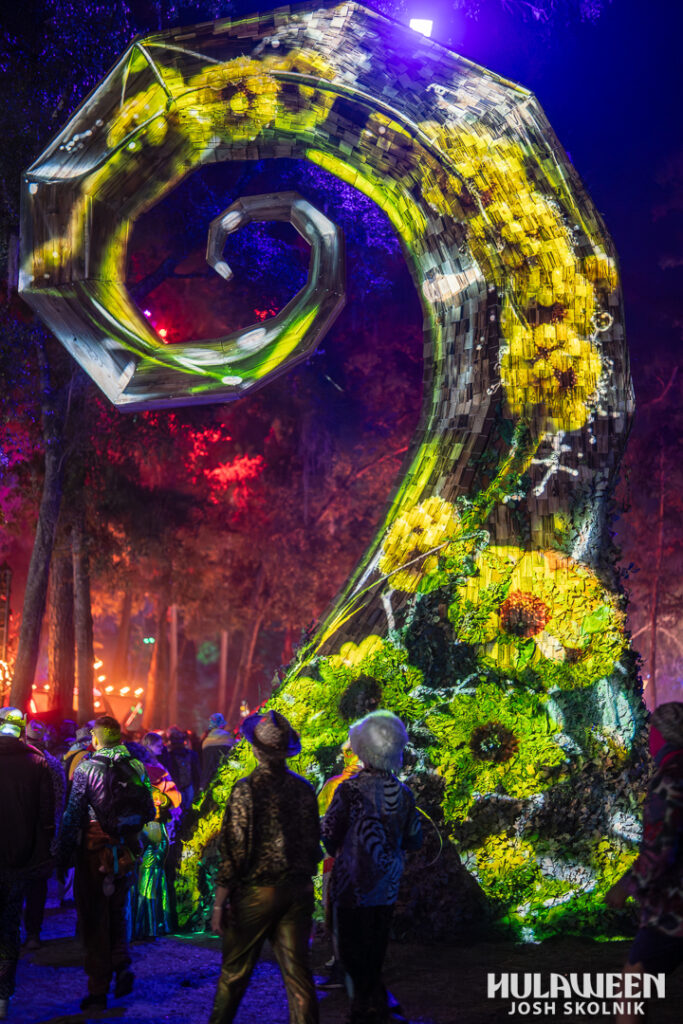
Fresh additions expanded Spirit Lake’s visual narrative. The Spider’s Eggs cleverly continued the story of Dambo’s aging Spider installation, where Fiddlehead—a monolith Fibonacci fern sculpture by Bolognino and RÜTS, built by Majestix Design—became the glowing new portal to the art hub. Other highlights included Foxlight Labs’ infinite SYNTHesthesia Crystals, PDA Woodwork’s interactive TeeterMAZE, Matt Elson’s reflective Radiance and Tanzer, Matt Bosch’s haunting Blood Ov Babalon, and LumaVoid Theatre’s shadow-puppet performances with Rabbit Foot Puppetry and Dragon Box Theatre.
The signature nightly projection show evolved across four acts—From Light, Into Shadow, The Radiant Veil, and The Dance of Light and Shadow—and introduced The Oracle of Spirit Lake, an interactive experience that invited guests to participate rather than just observe.
Still, many longtime attendees felt the changes. Spirit Lake no longer wrapped fully around the water, and there were fewer installations overall. We particularly missed Essi Rhodes and Ruben Robles’ Chatterpillars, Carsten Thue’s Alien Operation Tech, and the Oasis. The reduced footprint not only left attendees with less room to get lost exploring but also created congestion and increased dust from foot traffic. Yet despite the cutbacks, the creative team succeeded in preserving the mystique that defines Spirit Lake. Proof that even under constraint, Hulaween’s heart still beats vividly in the glow of the lake.
Vibe & Community
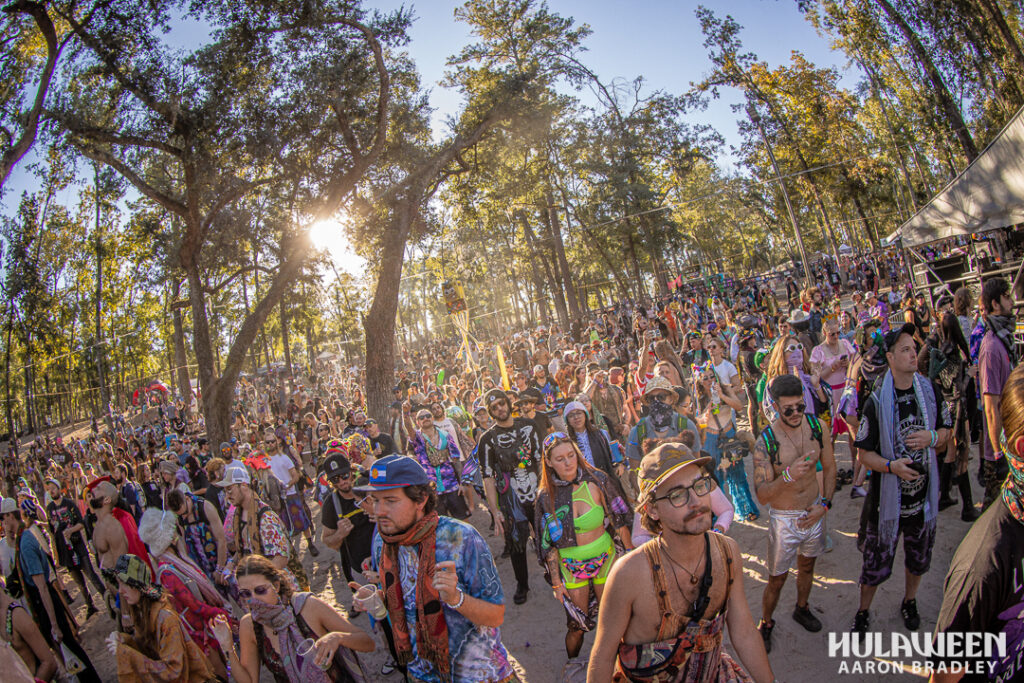
For all its visual spectacle, what truly defines Hulaween is its people. Capped at around 20,000 attendees, the festival maintains an intimacy that’s increasingly rare at large-scale events. This year’s crowd skewed slightly younger than in years past, yet still reflected the seasoned community spirit that’s been cultivated over a decade at the Spirit of the Suwannee. Veterans mingled with newcomers in a space that encouraged curiosity, generosity, and genuine connection—a place where festival culture isn’t just practiced but passed down.
The ethos of kindness was everywhere: shared shade, offered drinks, borrowed tools. One Lost & Found employee reported more than 50 phones returned in one day and a wallet holding $200 cash reunited with its rightful owner, untouched. It’s the kind of place where strangers trade handmade treasures and trinkets just to make each other smile. First-time attendees noted how safe and accepted they felt, and longtime Hulaweenies seemed committed to ensuring the sense of community endures.
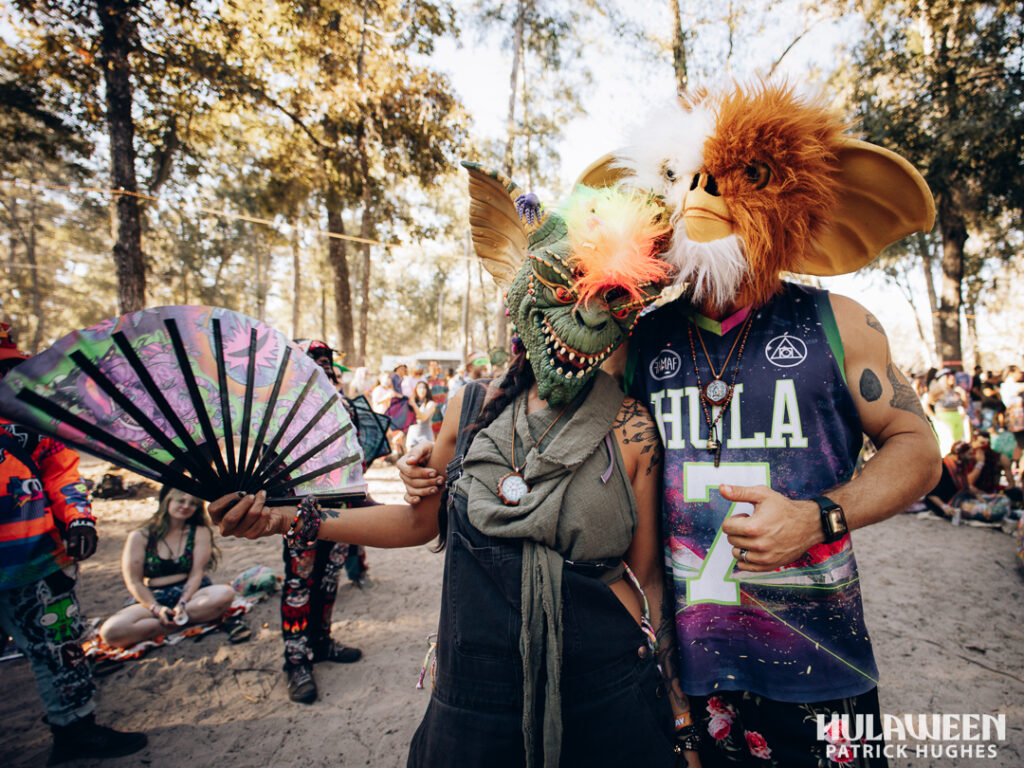
Large, creative camps dotted the forest, each one a micro community pulsing with music and open doors. And, as always, Halloween brought out the collective playfulness that sets Hulaween apart—elaborate costumes, glowing accessories, and themed group outfits that made every stroll feel like its own parade.
At its core, Hulaween’s magic lies not only in the art or the lineup but in this culture of care. It’s a place where the spirit of the festival extends far beyond the stages—where kindness, creativity, and connection remain the most essential acts of all.
Site & Layout
Set beneath the moss-draped oaks of the Spirit of the Suwannee Music Park, Hulaween continues to benefit from one of the most naturally mystical settings in the festival circuit. The park’s winding paths, riverside clearings, and dense canopy create a sense of discovery that few venues can match.
Operationally, this year showed both growth and growing pains. The festival team was quick to address logistical hiccups—notably improving entry and exit flow after Day 1 and communicating those updates efficiently through app notifications. Still, the early closure of certain paths and exits forced long detours that sometimes doubled or tripled the walk back to camp. Expanded restricted zones, likely for safety or maintenance reasons, added even more distance between key areas.
As previously mentioned, the smaller Spirit Lake area created overcrowding, especially when the other stages had shut down for the night. Conditions were also colder and dustier than usual, causing additional difficulties for attendees. Despite those challenges, the site retained its signature charm—a living blend of wilderness and wonder that remains central to Hulaween’s identity.
Amenities & Services
While Hulaween’s infrastructure remained largely reliable, this year’s amenities revealed some notable inconsistencies. Water stations were the most common complaint, especially within Spirit Lake, which featured only a single refill point near the entrance. Restrooms, on the other hand, were generally well-maintained and frequently serviced, with minimal wait times throughout the weekend, although the lack of handwashing stations stood out. Food and beverage prices rose again but stayed within the expected range for major festivals. However, the early closure of the Meadows and Hallows areas, particularly on Sunday, left attendees with limited access to food, restrooms, and water, reportedly frustrating both guests and vendors.
Accessibility was a bright spot. Multiple ADA viewing platforms provided solid vantage points, and the dedicated ADA campground offered close access to paths, entrances, exits, shuttles, and accessible bathrooms. VIP patrons enjoyed clean restrooms and hot showers, though the removal of the North VIP entrance and subpar catering drew criticism. The GA+ Lounge provided a welcome retreat from the crowds with cleaner facilities, though it lacked upgraded stage viewing—a missed opportunity that made some question the value.
The general store remained well stocked with essentials, and medical tents were clearly mapped and visible across the grounds. Still, the prevailing sentiment among attendees is clear: people are spending more to attend Hulaween and receiving slightly less in return.
Camping & Accommodations
Camping at Hulaween remains one of the festival’s defining pleasures. Unlike many large-scale camping festivals that pop up in empty fields, Hula takes place on real campgrounds complete with working restrooms and showers, a fully stocked general store (lifesaver), and even a café. It even has a river within walking distance of the venue. The setup options are as varied as the crowd itself: cabins nestled in the woods, RV sites transformed into elaborate Halloween displays and mini stages, and open camping areas that operate on a first-come, first-served basis.
Without strict space boundaries, campers are free to get creative with their setups, decorating with lights, flags, and inflatables that turn the grounds into a glowing nighttime village. That flexibility comes with a shared sense of respect—neighbors look out for one another, creating small communities that reflect the wider festival’s spirit of generosity and connection.
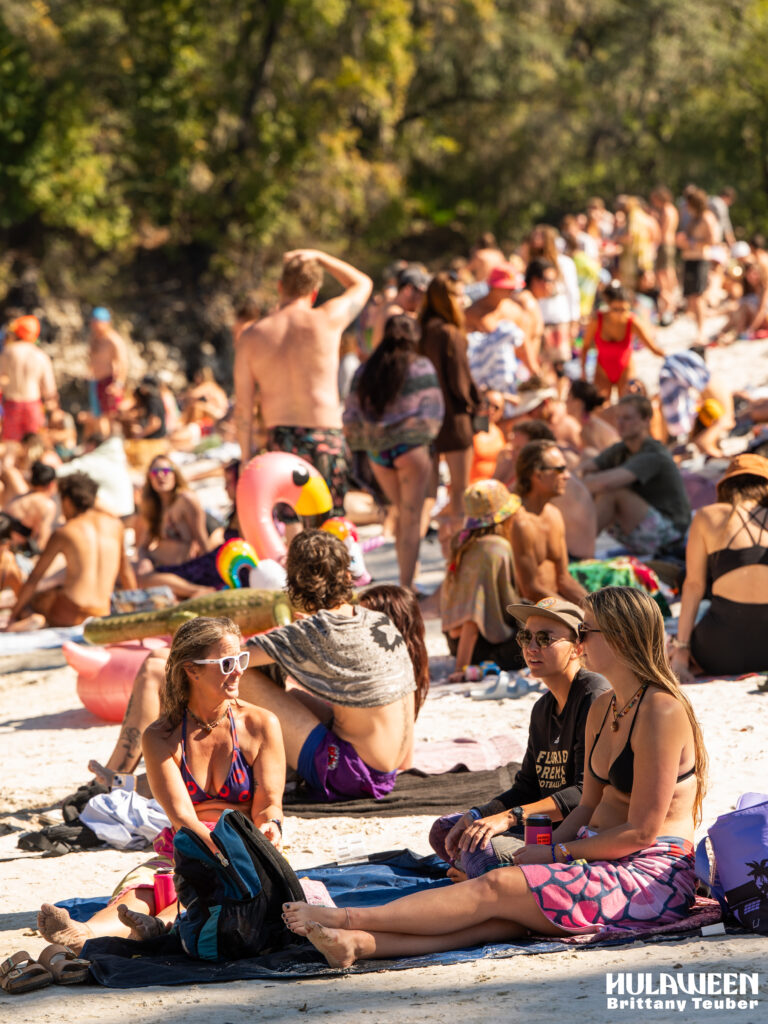
Cooler weather this year added a new challenge but also a bit of charm. Campfires became gathering spots, adding warmth and comfort to late-night conversations. Close proximity to the festival grounds made returning to camp easy, reinforcing what many attendees already know: camping is an essential part of the experience.
Transportation & Access
Arrival at Hulaween was slower than usual this year, with some attendees waiting over an hour to enter the campgrounds on Wednesday and Thursday. While the delay tested patience, it was still within reason for a festival of this scale. Shuttles from the grounds to off-site parking were also available with updated schedules posted and communicated efficiently.
Security, however, proved inconsistent. Enforcement varied by time of day and by entrance, leading to uneven experiences: some attendees breezed through with friendly interactions and fist bumps, while others encountered stricter checks or hostility. Totems were accepted at one gate and rejected at another, creating confusion and frustration.
Safety & Sustainability
Hulaween is one of the safer, more easygoing festivals on the circuit, and this year largely upheld that standard. The atmosphere throughout the weekend was relaxed and respectful, with most attendees looking out for one another. Security presence was visible but not overbearing. In one incident, we witnessed several guards subdue an aggressive attendee, a reminder of how quickly crowd management can shift.
On the sustainability side, Hulaween continues to make meaningful efforts through its Green Team initiative, which focuses on reducing waste, diverting recyclables and compostables from landfills, and educating attendees on responsible disposal. Many festivalgoers embraced that ethos, bringing refillable bottles and hydropacks to minimize single-use waste. The art installations themselves reflected a similar environmental consciousness, with many constructed from natural or locally sourced materials.
Overall Experience
Hulaween remains one of the most magical Halloween experiences in the country, a festival where music, art, nature, and whimsy converge. It’s a place that still captures that rare blend of intimacy and adventure, where the crowd feels like a community rather than a mass of strangers.
Musically, 2025 was top tier. Standout sets from Sammy Virji, Tape B b2b Disco Lines, Zeds Dead, and Parcels embodied the festival’s dynamic range. The lineup proved that Hula can continue to evolve without losing its soul.
Yet, for longtime attendees, this year also underscored growing concerns. Rising ticket and on-site prices left many feeling they were paying more and receiving less, and the noticeable cutbacks in art and decor chipped away at the festival’s signature. To returning fans, the immersive layer that transforms Suwannee into a storybook world felt diminished.
Still, Hulaween’s essence shone through. Its perfect venue, strong sense of community, and enduring character make it unlike any other festival in the country. One can only hope that organizers take the feedback to heart and reinvest in the creative spaces that define this event’s magic. Because when Hulaween leans into what it does best, it remains nothing short of extraordinary.