










Jean-Michel Jarre has been pioneering electronic music for over five decades and continues to lead by example through the exploration of modern technology. From his early experiments with synthesizers and sound tape to his visionary use of spatial audio and immersive settings, Jarre manages to evolve with the emerging technology of the future while honoring the humble beginnings of analog electronic music.
The Future Is Spatial Audio
In 2026, Jarre celebrated the 50th anniversary of his landmark album OXYGENE, which helped to take electronic music from the avant-garde underground to become a global phenomenon, uniting generations of artists and aficionados with his work. To mark the occasion, Jarre has a special 50th anniversary edition of OXYGENE which released on November 20. He also worked alongside the team at Dolby to use the original 8-channel tapes to remaster the album in Dolby Atmos, a unique spatial audio technology that supports up to 128 simultaneous audio objects, enabling creators to position specific sounds at exact coordinates based on the speaker arrays in the listening space.
However, this wasn’t Jarre’s first foray with Dolby Atmos technology. Four years ago, he released his 22nd studio album, OXYMORE, which was fully conceived from its origin to leverage the multichannel capabilities of Dolby Atmos. For the novice techies like myself, Dolby Atmos creates a three-dimensional, immersive sound experience by treating audio elements as individual objects rather than fixed channels. Unlike traditional surround sound, it adds a height dimension, allowing sounds to be precisely placed and moved anywhere in a 3D space, along a horizontal axis (right and left), as well as a vertical axis (up and down).
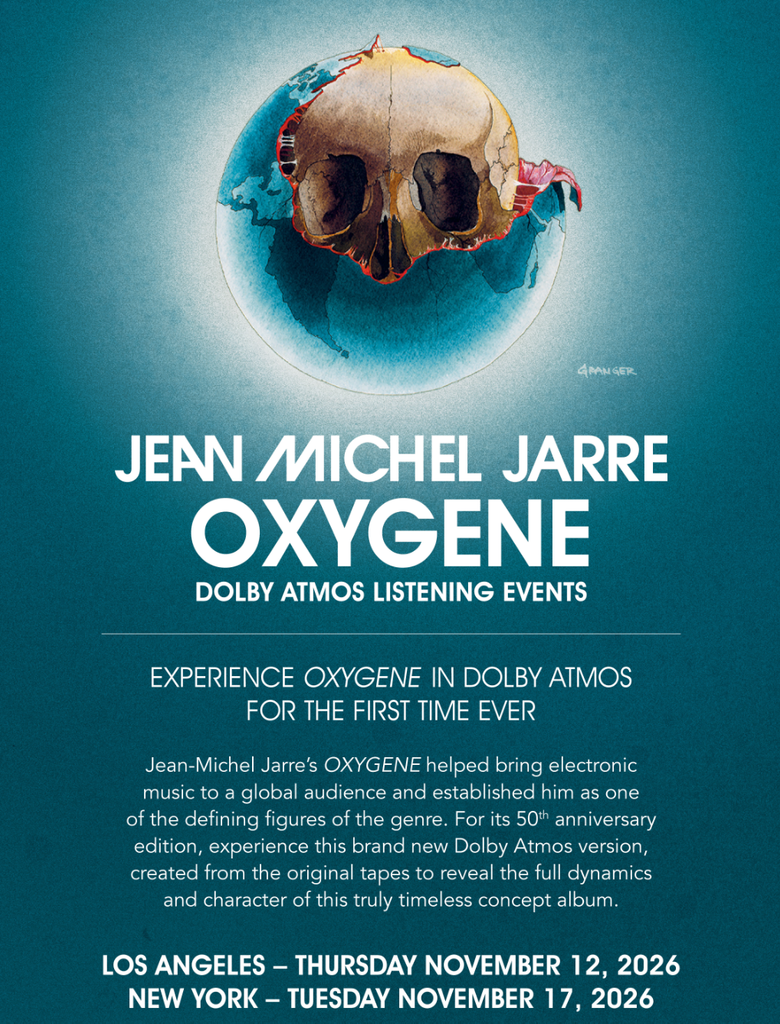
I was lucky to score an invite to one of Jarre’s 50th anniversary listening parties for OXYGENE in New York City last week. It was the first time I had ever witnessed a music album in a Dolby Atmos listening room, and I can honestly say it was the most extraordinary listening experience of my life. Not only was it a treat to hear such an influential piece of work from a pioneer of electronic music, but to hear the 6-track album from 50 years ago given new life with modern technology was nothing short of breathtaking. With my eyes closed for 40 minutes, I heard and felt the sounds of the album swirl all around me, from side to side and from above and below. It’s hard to even put into words, but if you ever have the chance to listen to an album created with Dolby Atmos technology, do not pass it up!
A History Of Electronic Music
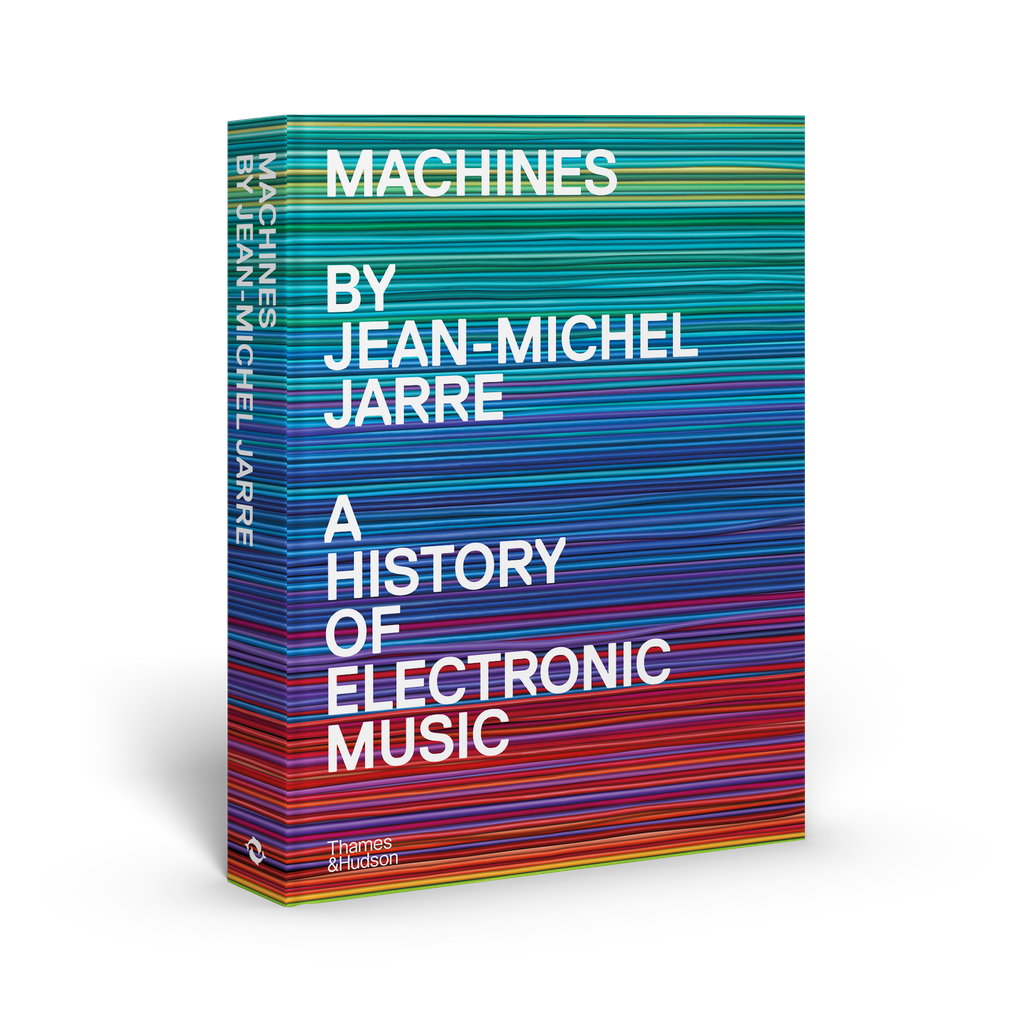
In addition to the release of his 50th anniversary edition of OXYGENE, Jarre also wrote a 368-page book detailing the history of electronic music through the 20th and 21st centuries. Titled “Machines: A History of Electronic Music,” the book shares an intimate look at the machines that he and his fellow artists used as they created and evolved the electronic music movement. With 150 photographs of iconic synthesizers, rare prototypes, and bespoke one-off creations, the book is an insightful and personal account of the music machines that Jarre used to help shape electronic music as we know it today.
“Machines: A History of Electronic Music” covers the evolution of electronic music through the perspective of an artist whose work helped shape the movement. From Surrealism and the Bauhaus to avant-garde radio labs and the pioneering studios who defined generations of musical style, Jarre thoughtfully charts the creative and technological breakthroughs that transformed modern music. He reflects on his childhood fascination with reel-to-reel tape machines and ventures into the future of immersive multimedia and 3D recording.
The book also features contributions from fellow artists Armin van Buuren, Richie Hawtin, Hans Zimmer, and many other influential musicians. Featuring over 400 illustrations, “Machines” offers a unique look into electronic music’s past, present, and future as seen through the eyes of one of its defining visionaries. Published by Thames & Hudson, “Machines: A History of Electronic Music” is available now and makes a great gift for anyone interested in the history of music and the evolution of the technology that shaped a worldwide musical revolution.
A Living Legend Of Electronic Music
To understand the life and legacy of Jean-Michel Jarre, one must look at his impressive accomplishments and unwavering dedication to push the limits of electronic music production. The producer, composer, and performer has released 22 studio albums and sold over 85 million copies worldwide. He was the first Western musician invited to perform in China, and has performed at iconic landmarks including the Great Pyramids of Giza, the Eiffel Tower, the Sahara Desert, and the Dead Sea to name just a few.
Jarre holds the world record for the largest concert audience playing to 3.5 million attendees at Moscow State University in 1997 and headlined the closing ceremony of the 2024 Summer Paralympics in Paris. As a UNESCO Ambassador for Education, Science, and Culture, Jarre continues to shine light on cultural innovations, responsible use of modern technology, and artists’ rights. He remains deeply engaged with the history of sound while exploring the possibilities of modern music as evidenced by his passion for immersive spatial sound. There is truly nobody better to tell the story about “Machines: A History of Electronic Music.”